
Heat pipes have become a fundamental component in modern thermal management systems, offering an efficient and reliable method for transferring heat. Their importance is especially evident in industries such as electronics, aerospace, automotive engineering, and renewable energy, where precise temperature control is essential for performance and safety. As devices continue to shrink in size while increasing in power, understanding how do heat pipes work is critical to addressing today’s thermal challenges.
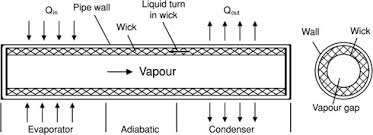
Heat pipes function through a highly effective heat transfer process that relies on phase change and capillary action. Each heat pipe is composed of a sealed outer shell, an internal wick structure, and a working fluid selected for specific operating conditions. When one section of the pipe is exposed to heat, the working fluid absorbs thermal energy and evaporates into vapor. This vapor travels rapidly to a cooler region of the pipe, where it condenses back into liquid and releases the absorbed heat.
The wick then draws the liquid back to the heated section, allowing the cycle to repeat continuously. This closed-loop mechanism enables heat pipes to move heat efficiently without requiring external power.
As technological demands evolve, heat pipe designs have also advanced. Improvements in materials, fluid chemistry, and manufacturing methods have expanded the range of environments where heat pipes can operate. From cooling advanced microprocessors to managing heat in space-based systems, heat pipes demonstrate how scientific principles can be applied to real-world engineering solutions.
What Are Heat Pipes?
Heat pipes are specialized thermal devices designed to transport heat with exceptional efficiency. By utilizing the phase change of a working fluid, they can move large amounts of heat over short distances with minimal temperature differences. This makes them especially useful in applications where traditional cooling methods, such as fans or heat sinks, are either ineffective or impractical.
The development of heat pipe technology began in the mid-1900s and has progressed steadily since then. Early heat pipes were relatively simple, but continued research has led to significant improvements in performance and durability. Modern heat pipes incorporate optimized wick structures, corrosion-resistant materials, and precisely chosen working fluids to meet the demanding requirements of today’s high-performance systems.
How Do Heat Pipes Work?
To fully understand how do heat pipes work, it is important to examine the continuous cycle that takes place inside the pipe. Heat applied to the evaporator section causes the working fluid to absorb energy and change from liquid to vapor. This vapor carries heat efficiently through the pipe toward the cooler condenser section.
Once the vapor reaches the condenser, it releases its thermal energy and condenses back into liquid form. Capillary action within the wick structure then draws the liquid back to the evaporator, ensuring uninterrupted heat transfer. This process occurs repeatedly as long as there is a temperature difference between the hot and cold sections of the pipe.
The effectiveness of this heat transfer process depends on three primary components: the shell, the wick, and the working fluid. The shell maintains structural integrity and protects the internal environment. The wick facilitates liquid return, and the working fluid determines the temperature range and efficiency of the heat pipe. Together, these components enable reliable and consistent thermal performance.
Types and Variations of Heat Pipes
Heat pipes are available in multiple configurations, each engineered to address specific thermal requirements.
Standard Heat Pipes
Standard heat pipes are the most commonly used type due to their straightforward design and versatility. They are widely applied in electronics, HVAC systems, and industrial equipment. Their reliability and ease of integration make them suitable for general heat transfer applications.
Vapor Chamber Heat Pipes
Vapor chamber heat pipes are designed for applications that require uniform heat spreading across a surface. Unlike traditional cylindrical heat pipes, vapor chambers distribute heat evenly, reducing the risk of hotspots. These heat pipes are commonly used in high-performance processors, graphics cards, and LED lighting systems.
Loop Heat Pipes
Loop heat pipes are designed for applications where space is limited or where orientation-independent operation is required. Their compact design and high efficiency make them ideal for aerospace, satellite, and other advanced systems where traditional heat pipes may not be suitable.
Heat Pipe Cooling Applications
Heat pipes are used across a wide range of industries due to their efficiency, reliability, and adaptability:
- Electronics Cooling: Used to manage heat in CPUs, GPUs, and power modules.
- Aerospace and Avionics: Provide thermal control for satellites, spacecraft, and avionics systems.
- Telecommunications: Cool sensitive equipment in confined or remote installations.
- Automotive Industry: Support battery and power electronics cooling in electric and hybrid vehicles.
- Renewable Energy Systems: Improve heat transfer in solar and power generation technologies.
- Medical Equipment: Ensure precise thermal regulation in imaging and diagnostic devices.
- HVAC Systems: Enhance energy efficiency through heat recovery applications.
- Industrial Cooling: Protect machinery and manufacturing equipment from overheating.
- Consumer Appliances: Improve performance in refrigerators, air conditioners, and other household devices.
- Data Centers: Maintain stable operating temperatures for servers and networking hardware.