
A question that comes up regularly when people are reviewing their financial protection is whether a standard health plan is enough or whether a critical illness policy needs to sit alongside it.
Most agents push both. Most buyers assume one is a duplicate of the other. Neither answer is fully right.
The two products solve different problems. Understanding what each one does and where it stops is the only way to answer whether one, both, or a different combination makes sense for a specific household.
What Health Insurance Plans in India Are Built to Do
Health insurance plans in India are designed around one central job. Paying hospital bills.
You get admitted. Surgery happens. Room charges run for a week. Doctor fees accumulate. Medicines are prescribed during the stay. Pre-admission tests were done. Follow-up consultations happen after discharge.
A comprehensive health plan covers most of this. Inpatient hospitalisation, pre and post-hospitalisation expenses for defined periods, daycare procedures, ambulance charges in most plans, and AYUSH treatments under IRDAI guidelines.
The cover works on an indemnity basis. Meaning the insurer reimburses or pays the actual expenses incurred up to the sum insured. Submit the bills. The insurer pays the eligible amount. What is not billed is not paid.
This works well for most routine health events. A fracture, an appendix surgery, a dengue hospitalisation, a cardiac procedure. The bills come in. The plan pays up to the limit.
What it does not address is the financial disruption that runs parallel to the treatment. The income that stops during recovery. The home loan EMI is still due every month. The household expenses that do not pause because someone is ill. The children’s school fees are arriving regardless of what else is happening. A standard health plan does not touch any of this. That gap is real, and it shows up at the worst possible time.
What a Critical Illness Policy Adds
A critical illness policy is built around a different trigger and a different payment mechanism.
It pays a lump sum when a listed condition is diagnosed. Not on hospital bills submitted. Not on treatment costs incurred. On confirmed diagnosis of a condition that qualifies under the policy terms.
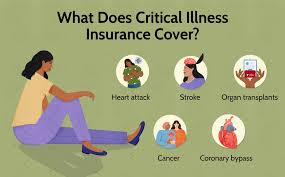
Cancer of specified severity. Heart attack meeting defined clinical criteria. Kidney failure requiring dialysis. Stroke with permanent disability. Major organ transplants. Coronary artery bypass surgery. Paralysis.
The lump sum goes wherever it is most needed. Treatment at a specialist centre in another city. Experimental therapy not covered by the health plan. Clearing the home loan EMI during the six months of no income. Paying household bills while a spouse manages a sick family member full-time. Covering whatever the health plan does not.
The size of the payout is fixed at the time of purchase. It does not depend on what the hospital charges. Whether the treatment costs 3 lakhs or 30 lakhs, the critical illness payout remains the same amount regardless.
Why Having Both Makes Sense for Most Earning Adults
Cancer treatment in India in 2026 can run 15 to 20 lakhs across the full course. A liver transplant costs 25 to 35 lakhs at a private hospital. Heart bypass surgery ranges from 2 to 7 lakhs. These figures come from current market data across metro private hospitals.
A health plan with a 10 lakh sum insured handles a significant portion of these costs if the hospitalisation expenses fall within that limit. But the sum insured can be exhausted. And even when it covers the medical bills, the three to six months of lost income during recovery are a separate problem entirely.
Someone earning 80,000 rupees monthly who cannot work for five months after a cancer diagnosis is looking at 4 lakhs of lost income. The health plan pays the hospital. Nobody pays the house.
A critical illness policy with a 20 to 25 lakh sum assured addresses that gap. The lump sum covers the income gap, the non-medical costs, and anything the health plan missed.
Health insurance plans in India and a critical illness policy are not competing. They are covering different parts of the same problem.
When a Critical Illness Policy Is Not Urgent
Not every household needs both immediately.
A 26-year-old single professional with no dependents, no home loan, and a good employer group health plan may find that adding a critical illness rider to an existing term plan is sufficient for now. The immediate protection need is covered. The income replacement concern is less pressing without dependents.
A 38-year-old with a home loan, two children in school, a non-earning spouse, and ageing parents has a very different exposure. For this person, losing income for several months due to a serious illness creates a cascading financial problem that a health plan alone cannot contain. The critical illness policy is not a luxury here. It is a practical necessity.
How to Get the Cover Without Paying for Two Full Premiums
A standalone critical illness policy is one route. It offers higher sum assured options, covers more conditions, and is not tied to any other product.
A critical illness rider attached to a term insurance plan is often cheaper for comparable coverage. The rider premium is lower than a standalone plan for similar benefits, and it sits alongside existing life cover under one policy. The tradeoff is that the conditions list is sometimes shorter, and the sum assured options may be limited compared to a dedicated plan.
For most buyers, the rider route is a practical starting point. Those needing a higher sum assured or broader condition coverage can step up to a standalone critical illness policy as income grows over the years.