
Introduction
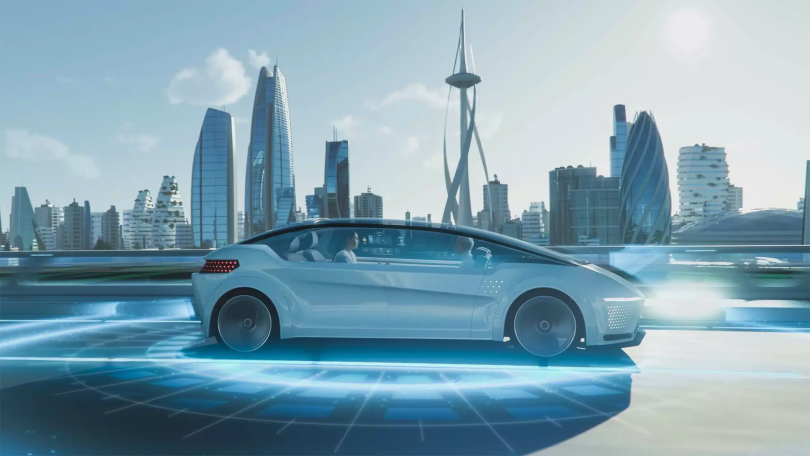
Autonomous vehicles, also known as self-driving cars, represent one of the most revolutionary advancements in modern transportation technology. These vehicles are capable of sensing their environment, processing information, and navigating without human intervention.
With the integration of Artificial Intelligence, sensors, machine learning, and advanced computing systems, autonomous vehicles are transforming the automotive industry and reshaping the future of mobility.
What are Autonomous Vehicles?
Autonomous vehicles are cars or transportation systems that can operate and drive themselves with little or no human input.
They use a combination of sensors, cameras, radar, and AI algorithms to understand their surroundings and make driving decisions.
Levels of Autonomous Driving
Level 0: No Automation
Full human control over the vehicle.
Level 1: Driver Assistance
Basic assistance like cruise control.
Level 2: Partial Automation
Vehicle can control steering and speed under supervision.
Level 3: Conditional Automation
Vehicle can drive independently in certain conditions.
Level 4: High Automation
Vehicle can operate without human intervention in specific environments.
Level 5: Full Automation
Complete self-driving capability in all conditions.
These levels define the progress toward full autonomy.
How Autonomous Vehicles Work
- Sensors collect real-time environmental data.
- Cameras detect objects, pedestrians, and road signs.
- Radar and LiDAR map surroundings in 3D.
- AI processes data to make driving decisions.
- Control systems execute acceleration, braking, and steering.
This allows the vehicle to navigate safely and efficiently.
Key Technologies in Autonomous Vehicles
Artificial Intelligence
Enables decision-making and learning from data.
Machine Learning
Improves driving performance over time.
LiDAR
Creates detailed 3D maps of surroundings.
Radar Systems
Detects objects and their speed.
Computer Vision
Interprets images and video data.
GPS and Mapping Systems
Provides navigation and location data.
These technologies work together for safe driving.
Applications of Autonomous Vehicles
Personal Transportation
Self-driving cars for Trang chủ sunwin.
Public Transport
Autonomous buses and shuttles.
Logistics and Delivery
Self-driving trucks and drones.
Ride-Sharing Services
Driverless taxi systems.
Military Applications
Autonomous surveillance and transport.
Autonomous vehicles are used across industries.
Benefits of Autonomous Vehicles
Increased Safety
Reduces human driving errors.
Improved Traffic Flow
Optimizes driving patterns.
Reduced Accidents
AI reduces collision risks.
Fuel Efficiency
Optimized driving saves energy.
Convenience
Allows passengers to focus on other tasks.
These benefits improve transportation systems.
Challenges of Autonomous Vehicles
High Development Cost
Requires expensive technology.
Ethical Concerns
Decision-making in critical situations.
Legal Issues
Lack of clear regulations.
Technical Limitations
Difficulty handling complex environments.
Cybersecurity Risks
Systems can be targeted by hackers.
These challenges slow widespread adoption.
Role of Artificial Intelligence in Autonomous Vehicles
AI is the core of autonomous driving systems. It processes sensor data, predicts road conditions, recognizes objects, and makes real-time driving decisions.
Autonomous Vehicles and Smart Infrastructure
Self-driving cars rely on smart infrastructure such as connected traffic systems, 5G networks, and intelligent road signals to function efficiently.
Future of Autonomous Vehicles
The future of autonomous transportation is highly promising and will significantly change how people travel and transport goods.
Future developments may include:
Fully Autonomous Cities
Cities designed for driverless transport.
AI-Controlled Traffic Systems
Smart traffic coordination.
Electric Self-Driving Fleets
Eco-friendly autonomous transport systems.
Global Autonomous Logistics Networks
Fully automated delivery systems.
Zero-Accident Transportation Systems
AI-based safety optimization.
Autonomous vehicles will redefine mobility.
Conclusion
Autonomous vehicles represent a major breakthrough in transportation technology. They combine sun.win, sensors, and advanced computing to create safer, smarter, and more efficient mobility systems.
Although challenges such as cost, ethics, regulation, and technical limitations exist, continuous innovation is rapidly advancing the field.
In the future, self-driving vehicles will become a standard part of transportation systems, transforming how people and goods move across the world.
As technology evolves, autonomous vehicles will play a central role in building a safer, more efficient, and intelligent transportation future.