
The online trading industry has evolved over the years. One of the newest creations is synthetic trading, which provides traders round-the-clock availability and unique market dynamics.
In this guide, we cover more about synthetic trading, how it works, and what you need to start investing in synthetic indices.
How Does Synthetic Trading Work?
When did synthetic indices start? The origin of synthetic indices can be traced back to the early 2000s. However, synthetic trading and indices as we know them today were launched in 2010.
Synthetic indices are generated using sophisticated algorithms and random number generators that simulate market behavior and create price fluctuations. One thing you need to know is that the algorithm is developed and owned by the broker offering the synthetic indices.
Synthetic indices or markets are immune to external events, such as economic reports, company earnings, political developments, or inflation reports. As a result, you don’t need fundamental analysis in synthetic trading.
Moreover, synthetic indices are available for trading 24 hours a day, seven days a week, including weekends and public holidays.
Types of Synthetic Markets
Each type of synthetic index is built to exhibit distinct price characteristics. This allows you to choose indices that align with your preferred trading strategies and risk tolerance.
§ Volatility Indices
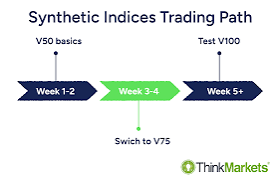
Volatility indices simulate markets with predetermined levels of price volatility. Popular examples of volatility indices include the Volatility 10 Index, Volatility 25 Index, Volatility 75 Index, and Volatility 100 Index.
The number generally represents the average level of market volatility. As such, Volatility 100 produces the largest and fastest price movements, making it one of the riskiest and most volatile synthetic indices.
Before investing in volatility indices, view more information about them, especially if you are new to synthetic trading.
§ Crash and Boom Indices
Boom indices produce sudden upward price spikes after periods of relatively steady market movement. Crash indices, on the other hand, generate occasional sharp downward price drops following periods of relatively stable movement.
Although both booms and crashes occur according to the algorithm design, their exact timing cannot be predicted.
§ Step Indices
Step indices move in small fixed increments rather than the continuously varying price changes seen in most financial markets. Each price movement occurs in predetermined “steps,” creating charts that appear more structured and orderly.
Their predictable and steady movements make them more appealing to beginners who are seeking to dive into synthetic trading.
§ Jump Indices
Another popular synthetic index type is the jump indices. The price fluctuations of jump indices resemble those of conventional markets most of the time. However, the fluctuations are punctuated by occasional large price jumps.
Between jumps, prices move relatively smoothly. Then, without warning, the market makes a significant upward or downward move before returning to its usual behavior.
Wrapping up
Synthetic trading is a solid option for those seeking to diversify their trading portfolios. However, it’s important to understand that while synthetic markets operate differently from conventional financial markets, they are still challenging to trade.
For beginners, we recommend demo trading first before committing real capital. Start by learning how different indices operate and develop a strategy before making your move.