
In recent years, digital transformation has reshaped nearly every industry, enabling companies to work smarter, faster, and more accurately. Among the technologies driving this revolution, the 3d laser scanner has emerged as one of the most powerful tools for capturing real-world objects and environments. By generating precise digital models of physical items, 3D laser scanning allows engineers, designers, architects, and creators to streamline workflows, eliminate guesswork, and enhance precision in every stage of production.
As businesses continue to seek improved accuracy and efficiency, the value of laser-based 3D scanning continues to rise. This article explores what a 3D laser scanner is, how it works, its applications, and the many benefits it offers across various industries.
What Is a 3D Laser Scanner?
A 3D laser scanner is an advanced digital device that captures the shape, size, and surface details of an object using laser technology. Instead of relying on manual measurements or photographs, the scanner projects laser beams onto an object and records how the beams bounce back. These reflections are used to calculate distances, angles, and geometry with incredible accuracy.
The result is a detailed “point cloud,” a digital representation of millions of precise data points. Software then processes these points into a complete 3D model that can be viewed, edited, analyzed, or reproduced using 3D printing and other technologies.
Because laser scanning delivers extremely accurate results, it is ideal for industries that demand high precision, such as engineering, manufacturing, quality control, and architecture.
How a 3D Laser Scanner Works
The functioning of a 3D laser scanner relies on several core components working together to capture and calculate accurate 3D information:
1. Laser Projection
The scanner emits a laser beam toward the surface of an object. The beam may sweep over the object continuously or project structured lines depending on the scanner’s design.
2. Reflection Measurement
Sensors detect how the laser beam reflects off the object. The time it takes for the light to return—or the angle at which it reflects—is used to calculate distance.
3. Data Processing
Millions of reflection points are captured in seconds. Software then organizes this data into a point cloud, creating a highly accurate 3D representation.
4. Model Creation
Using specialized software, the point cloud becomes a usable 3D model that can be edited, analyzed, or prepared for manufacturing or digital use.
This entire process is fast, efficient, and highly precise, allowing for detailed scanning of both small objects and large environments.
Key Advantages of Using a 3D Laser Scanner
The popularity of 3D laser scanning has grown because of the many benefits it provides. Some of the most notable advantages include:
1. Exceptional Accuracy
Laser scanning can capture extremely small details with minimal error. This level of precision is critical for engineering, inspection, forensics, and other fields where accuracy cannot be compromised.
2. Fast Data Capture
Traditional measuring methods can take hours or even days, especially for complex objects. A laser scanner can complete the same task in minutes, accelerating workflows significantly.
3. Reduced Human Error
Manual measurements leave room for mistakes. Laser scanning automates the process, ensuring consistent and reliable data every time.
4. Detailed Visualization
Point cloud data allows users to analyze objects from every angle, zoom in on details, and evaluate surface imperfections that may not be visible to the naked eye.
5. Enhanced Efficiency in Design and Manufacturing
Scanned models can be imported into CAD software, modified, and recreated through CNC machining or 3D printing. This accelerates reverse engineering, prototyping, and quality inspections.
Industries That Rely on 3D Laser Scanning
The use of a 3d laser scanner spans many industries, each benefiting from its accuracy and speed.
Engineering and Product Design
Engineers use laser scanning to reverse-engineer parts, inspect production components, and create precise digital models for redesign or replication.
Manufacturing and Quality Control
Laser scanning ensures that products match their specifications by comparing scanned models to CAD files. This reduces defects and improves consistency.
Architecture and Construction
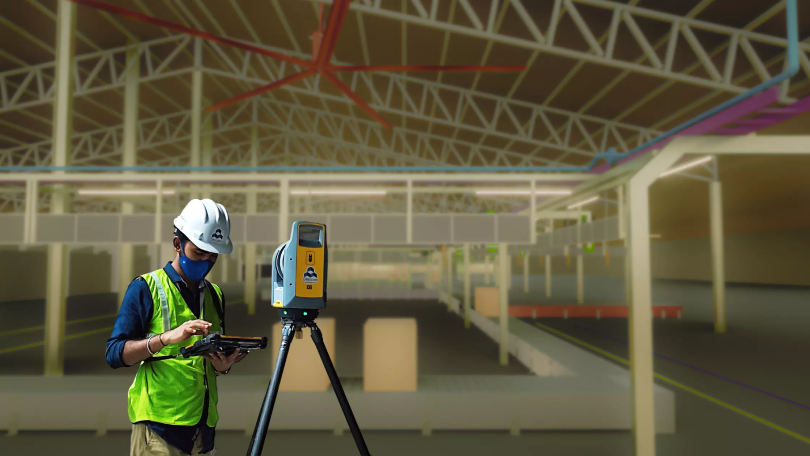
Architects scan buildings, rooms, and environments to create accurate floor plans and 3D renderings. It also helps detect structural issues and aids in renovation planning.
Healthcare
In medical fields, 3D scanning assists in creating customized prosthetics, orthotics, and dental appliances. Precision is essential when fitting devices to patients.
Art, Culture, and Museums
Historical artifacts can be scanned and digitally preserved without risk of damage. Artists also use scanning to replicate sculptures and develop creative concepts.
Automotive and Aerospace
Scanning allows manufacturers to inspect vehicle components, measure wear, and create replacement parts with exact tolerances.
Education
Students benefit from exposure to real-world tools used in industry. Laser scanning enhances STEM learning by bridging the gap between theory and practical application.
Choosing the Right 3D Laser Scanner
With numerous scanning devices on the market, selecting the right one requires careful consideration. Here are key factors to evaluate:
1. Accuracy and Resolution
Look for scanners capable of capturing extremely fine details, especially if you work in engineering, design, or inspection.
2. Scanning Range
Some scanners are ideal for small objects, while others are designed for large areas like buildings. Choose one that matches your typical project size.
3. Portability
Lightweight and handheld scanners offer convenience, especially for fieldwork or scanning large objects.
4. Software Compatibility
The scanner should be compatible with common formats such as STL, OBJ, and PLY and work smoothly with CAD and 3D modeling software.
5. Ease of Use
Auto-calibration, intuitive interfaces, and beginner-friendly tools help make scanning accessible to everyone.
6. Price and Value
A good scanner should offer balanced performance and features compared to its cost. Consider long-term value rather than just the initial price.
A Reliable Source for Advanced 3D Laser Scanning Solutions
When it comes to choosing a powerful, user-friendly device, many professionals and creators trust RevoPoint. Their innovative scanning technology provides precision, portability, and performance suitable for industries of all kinds. To explore high-quality scanning options, visit:
3d laser scanner
Conclusion
The 3d laser scanner has transformed how industries design, measure, and analyze physical objects. Its ability to capture accurate 3D data quickly and reliably has made it an essential tool in engineering, architecture, manufacturing, healthcare, and beyond. As technology continues to advance, laser scanning will play an even more influential role in digital transformation.
Whether you’re reverse-engineering a mechanical part, creating detailed architectural plans, or preserving historical artifacts, a high-quality 3D laser scanner enhances accuracy, productivity, and creative freedom. For organizations and individuals striving to stay ahead in a competitive world, integrating laser scanning technology is no longer optional—it’s a smart investment that unlocks new possibilities.