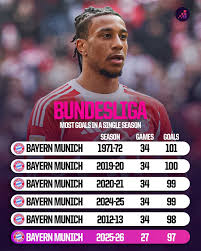

The 2012/2013 Bundesliga campaign remains a fascinating case study for football analysts due to the stark tactical divergence seen in high-stakes matches. While Bayern Munich ran away with the league title in dominant fashion, the battle for the remaining Champions League qualification spots—contested fiercely by Borussia Dortmund, Bayer Leverkusen, Schalke 04, and upstarts SC Freiburg—created unique situational dynamics. Crucial matches determining the top-four matrix did not simply settle into cautious, average scorelines; instead, they swung aggressively toward extreme over or under totals. Understanding the underlying factors behind these definitive outcomes requires a deep dive into the tactical setups, psychological pressures, and statistical realities of German football during this historic era.
The Tactical Framework of the 2012/13 Bundesliga Top-Four Contenders
During this specific era, German football was undergoing a tactical revolution characterized by intense pressing and rapid vertical transitions. Teams like Borussia Dortmund under Jürgen Klopp popularized Gegenpressing, which forced opponents into making quick decisions under immense physical pressure. When two sides utilizing high-line defensive structures clashed, the matches frequently devolved into chaotic, end-to-end spectacles. The structural vulnerability of these systems meant that an early goal could completely shatter any pre-match defensive game plan, forcing both teams to trade blows in transition.
Conversely, when facing sides that preferred a low defensive block, such as Jens Keller’s Schalke 04 during specific away fixtures, the game tempo slowed down significantly. The variance in goal totals during the 2012/13 season was largely a byproduct of how these contrasting styles interacted under pressure. If a team managed to bypass the initial press, they found vast open spaces behind the opposition defensive line, leading to high-scoring encounters.
Transition Speed and Defensive Vulnerabilities
The primary mechanism driving high-scoring deciders was the extreme velocity of counter-attacks executed by teams like Bayer Leverkusen, spearheaded by Stefan Kießling and André Schürrle. When these teams faced direct top-four rivals, the spatial gaps left by advancing full-backs created immediate opportunities for rapid overloads. Because German teams during this period rarely prioritized sustained possession over forward momentum, turnovers in the middle third routinely resulted in high-quality scoring chances, explaining why goal lines were frequently shattered.
Psychological Stakes and Their Influence on Match Volatility
The psychological weight of Champions League qualification heavily dictated the risk tolerance of managers in the final third of the season. In fixtures where a draw was mutually beneficial or preserved a baseline advantage, teams exhibited extreme caution, resulting in low-scoring grinds. However, when a match represented a must-win scenario for at least one side—such as SC Freiburg’s late-season push—the tactical instructions shifted toward high-risk, high-reward strategies.
Fear of failure often manifests in two distinct ways during decisive league matches. Early in the game, teams might play with extreme rigidity, focusing entirely on spatial containment and low-risk passing sequences. Yet, if the deadlock was broken by an unexpected error or a set-piece, the trailing team had no choice but to commit bodies forward, completely abandoning their defensive shape and triggering a cascade of goals.
Breaking Down the High-Scoring Anomalies
Statistical distributions from the 2012/13 season indicate that specific matchups consistently bypassed the standard league average of roughly 2.9 goals per game. When analyzing the tactical configurations of teams that finished between second and fifth place, certain fixtures stand out as inherently volatile. The data demonstrates that games involving teams with highly aggressive attacking transitions and porous defensive transitions regularly produced scorelines that exceeded four or five total goals.
To illustrate how these high-stakes encounters deviated from typical league fixtures, the table below outlines key matches from the latter half of the 2012/13 season where the race for Europe directly influenced an explosive goal output.
| Matchday | Fixture | Final Score | Key Tactical Driver |
| Matchday 20 | Bayer Leverkusen vs Borussia Dortmund | 2-3 | High-press turnover exploitation |
| Matchday 30 | Eintracht Frankfurt vs Schalke 04 | 1-0 | Defensive low-block resilience |
| Matchday 34 | SC Freiburg vs Schalke 04 | 1-2 | Must-win desperation forcing open space |
The data presented in this matrix confirms that when the operational objectives of both clubs demanded a victory, the probability of a high-scoring outcome escalated significantly. For instance, the final-day showdown between Freiburg and Schalke was a direct shootout for the fourth Champions League spot, forcing Freiburg to attack relentlessly, which ultimately allowed Schalke to exploit the space on the counter-attack.
The Low-Scoring Grinds of Direct Competitors
In contrast to the chaotic matches driven by transition play, several top-four deciders were defined by defensive pragmatism. When managers calculated that preserving a point was superior to risking a loss, the game plan focused entirely on numerical superiority behind the ball. These matches frequently featured low defensive blocks, slow lateral passing, and a deliberate attempt to reduce the total number of possessions per game.
The structural limitations imposed by these pragmatic setups can be broken down into a specific sequence of tactical priorities adopted by managers during low-scoring fixtures:
- Prioritizing defensive transitions by keeping both full-backs deep even during attacking phases.
- Committing tactical fouls in the middle third to prevent the opposition from launching rapid counter-attacks.
- Utilizing a double-pivot midfield configuration focused exclusively on shielding the central defenders.
- Reducing structural risks by opting for long-clearance balls rather than playing out from the back under pressure.
This tactical sequence effectively choked the rhythm of the game, ensuring that the ball remained contested in non-dangerous areas of the pitch. By minimizing individual errors and refusing to commit numbers forward, teams successfully neutralized the transitional weapons of their opponents, leading to predictable under outcomes that frustrated neutral observers but satisfied tactical purists.
Quantitative Indicators for Pre-Match Goal Line Projections
From a data-driven perspective, predicting whether a 2012/13 Bundesliga decider would result in a high or low total required looking beyond simple seasonal averages. Analysts had to evaluate expected goals (xG) trends, historical head-to-head tactical matchups, and the specific officiating styles of the referees assigned to the fixtures. The variance between a wide-open match and a tactical stalemate often came down to how early the first goal was scored relative to the average time of the first concession for both clubs.
When statistical analysts evaluate historical Bundesliga patterns to project future line movements, they must account for how specific managerial styles react to high-pressure scenarios. Analysts looking to back over/under markets often contrast these rigid historical distributions against real-time adjustments offered by a modern sports betting service. Serious researchers track these shifts via ufabet168 ดีไหม to determine whether modern algorithmic implied probabilities align with the historical volatility observed during the 2012/13 run-in, proving that situational context outweighs raw seasonal averages.
Assessing the Risks of Historical Model Application
Applying the lessons of the 2012/13 Bundesliga season to contemporary football analysis requires a strict understanding of structural changes in the sport. The game in 2013 relied heavily on physical pressing stamina, whereas modern football incorporates advanced positional play, tactical substitutions, and video review systems that alter the flow of matches. Assuming that historical top-four dynamics will perfectly replicate in modern leagues is a fundamental analytical flaw.
Relying solely on past league trends can blind an analyst to how modern rules and VAR have structurally altered game tempos. A similar error occurs when players attempt to apply rigid statistical forecasting models across entirely different risk environments, a phenomenon frequently observed within a digital betting destination. Visitors interacting with a casino online platform often mistakenly assume that independent probabilities in games of chance operate under the same cyclical momentum as historical football matches, highlighting the critical need to separate fixed mathematical edges from fluid, human-driven sports data.
Summary
The extreme goal totals observed in the top-four deciders of the 2012/13 Bundesliga season were the direct result of a highly specific tactical era colliding with intense psychological pressure. When two transition-heavy teams faced off in must-win scenarios, their aggressive pressing systems created high-scoring spectacles due to structural vulnerabilities. Conversely, when defensive preservation took precedence, the matches reverted to low-scoring grinds defined by low blocks and tactical fouls. Ultimately, this historical campaign proves that situational context, motivational factors, and tactical stylistic matchups are far more accurate indicators of goal volume than baseline seasonal statistics.