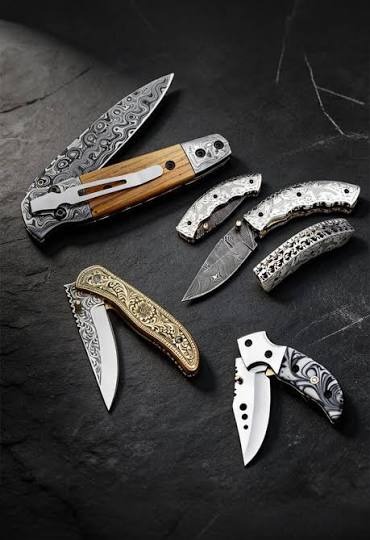

Choosing the best pocket knife for everyday carry and outdoor use requires more than picking a blade that looks sharp or attractive. A useful folding knife should balance portability, cutting performance, durability, comfort, and ease of maintenance.
Whether you need an EDC knife for everyday tasks or a folding knife for camping and hiking, the right features can make a significant difference. Blade steel, blade shape, handle material, locking mechanism, ergonomics, edge retention, and overall construction all affect how a pocket knife performs.
Handmade knives also bring another consideration into the decision: craftsmanship. A carefully finished knife can combine practical functionality with distinctive materials, patterns, and traditional knife-making details.
For example, JW SteelCrafts offers handmade Damascus folding and pocket knives with different blade profiles, locking systems, and handle materials. Its current collection includes both liner-lock and lock-back designs, making it possible to compare different approaches to everyday and outdoor carry.
What Makes the Best Pocket Knife for EDC and Outdoor Use?
The best JW SteelCrafts handmade knives depends on how you intend to use it. An office worker who occasionally opens packages may want a compact folding knife, while a camper may prioritize a stronger handle, versatile blade geometry, and outdoor durability.
A practical pocket knife should generally provide:
- A useful blade size
- Suitable blade geometry
- Appropriate blade steel
- Reliable locking mechanism
- Comfortable handle
- Secure grip
- Good edge retention
- Reasonable weight
- Convenient pocket carry
- Easy maintenance
- Construction suited to its intended tasks
There is no single combination that works for everyone. Instead, consider the features according to your daily routine and outdoor activities.
1. Choose the Right Pocket Knife Size
Size is one of the most important factors when choosing an EDC pocket knife. A compact knife takes up less space and can be more comfortable for everyday carry, while a larger folder may provide additional cutting surface and a more substantial grip.
Pay attention to both the blade length and the closed length. The closed dimensions determine how comfortably the knife sits inside a pocket, bag, or other carrying system.
For everyday utility, a moderate blade can handle tasks such as cutting cardboard, rope, packaging, tape, and other suitable materials. Outdoor users may prefer a slightly larger design when they expect more demanding cutting tasks.
However, bigger does not automatically mean better. A pocket knife should be convenient enough that you will actually carry it.
2. Select a Useful Blade Shape
Blade shape affects cutting performance, tip control, slicing ability, and the overall purpose of a folding knife.
Common pocket knife blade shapes include drop point, clip point, and tanto.
Drop Point Pocket Knife
The drop point is one of the most versatile blade profiles. Its lowered spine creates a strong point while leaving a broad belly for slicing.
This combination makes a drop point pocket knife suitable for many general-purpose EDC and outdoor applications.
For someone buying a single folding knife for multiple tasks, a drop point design can provide a useful balance between slicing performance and tip control.
Clip Point Pocket Knife
A clip point blade has a distinctive clipped or curved section near the tip. The resulting point can be useful for detailed cutting and precision-oriented tasks.
This profile is also associated with traditional folding knife designs and can appeal to users who appreciate classic knife aesthetics.
Tanto Pocket Knife
Tanto blades feature a more angular profile and reinforced tip geometry. They are commonly found on modern folding knives and utility-oriented designs.
The right blade profile depends on the work you expect the knife to perform. Instead of choosing based only on appearance, consider how the geometry matches your intended tasks.
3. Pay Attention to Blade Steel
Blade steel plays a major role in knife performance. Different steels offer different combinations of hardness, toughness, edge retention, corrosion resistance, and sharpening characteristics.
When comparing pocket knives, do not focus only on the name of the steel. Consider how the blade has been manufactured, heat treated, finished, and intended to be used.
Damascus Steel
Damascus steel is particularly popular among knife enthusiasts because of its distinctive layered patterns.
Modern pattern-welded Damascus is produced by forge-welding different steel layers and manipulating them to create a recognizable pattern. The resulting appearance can vary from blade to blade.
For buyers who appreciate both function and craftsmanship, a Damascus pocket knife can provide an interesting combination of cutting utility and visual character.
However, the pattern itself should not be the only purchasing factor. Blade geometry, construction, heat treatment, edge quality, and maintenance requirements still matter.
4. Look for Reliable Locking Mechanisms
A folding knife should have a locking system appropriate for its design and intended use. The mechanism keeps the blade in its open position during normal cutting tasks and influences how the knife opens and closes.
Two common mechanisms are liner locks and lock backs.
Liner Lock
A liner lock uses a section of the internal handle liner to engage the blade tang when the knife is opened.
This design is widely used in folding knives and is popular for everyday carry because it can support convenient one-handed operation.
Lock Back
A lock-back folding knife uses a locking bar along the spine of the handle. When the blade opens, the mechanism engages with the blade tang.
Lock backs have a traditional feel and can provide a deliberate opening and closing experience.
JW SteelCrafts currently offers both liner lock folding knives and lock-back folding knives, allowing users to choose between different folding mechanisms within its handmade collection.
5. Consider Handle Material
The handle affects comfort, grip, balance, durability, and appearance.
Pocket knives can use many different handle materials, including:
- Wood
- Bone
- Stag or antler
- Micarta
- Pakka wood
- Resin
- Brass
- Other composite or metal materials
Wood handles are popular among people who prefer a traditional appearance. Natural materials such as bone and stag can provide individual grain and color variations.
Synthetic and composite materials can be useful for users who prioritize grip, durability, and performance in changing outdoor conditions.
The important point is to choose a handle that suits the way you intend to carry and use the knife.
6. Prioritize Ergonomic Knife Handles
A pocket knife should feel comfortable and controlled in your hand.
Look at the handle shape, thickness, texture, and balance. A poorly shaped handle can become uncomfortable during repetitive cutting, even when the blade itself performs well.
For outdoor use, ergonomics become even more important. Hiking, camping, fishing, and other activities can expose your hands to moisture, dirt, cold temperatures, and fatigue.
A comfortable handle can help you maintain a secure grip during appropriate cutting tasks.
When examining a folding knife, do not judge the handle only by its appearance. Think about how it would feel after several minutes of actual use.
7. Check Edge Retention
Edge retention describes how long a knife can maintain useful cutting performance before sharpening becomes necessary.
Several factors influence edge retention:
- Blade steel
- Heat treatment
- Edge geometry
- Blade thickness
- Cutting material
- Cutting technique
- Maintenance
A knife with excellent edge retention can reduce the frequency of sharpening, which may be useful for people who carry their knives regularly.
However, edge retention is only one part of the equation. A blade that holds an edge extremely well may have different sharpening characteristics from another steel.
The best pocket knife should provide a balance that suits your actual needs.
8. Consider Pocket Knife Weight
An EDC knife should be practical to carry.
Weight becomes particularly noticeable when a knife is carried every day. A heavy folder may feel unnecessary for simple utility tasks, while outdoor users may be comfortable carrying additional weight if it provides a larger handle or more substantial construction.
Consider the entire knife rather than the blade alone.
Look at:
- Blade length
- Handle thickness
- Overall weight
- Closed length
- Carry position
- Pocket space
- Additional hardware
A compact folding knife can be an excellent choice when portability is your main priority.
9. Look at Blade Thickness and Geometry
Blade thickness affects the balance between slicing ability, strength, and overall weight.
A thinner blade can move through certain materials efficiently, while a thicker blade may provide greater material behind the edge.
Geometry also matters. A knife with an excellent steel type can still perform poorly if the blade geometry does not match the intended application.
For everyday carry, versatile geometry is often more useful than an extremely specialized profile.
For outdoor use, consider the materials you expect to cut and choose a blade designed for those appropriate tasks.
10. Examine the Overall Knife Construction
Quality construction involves more than the blade.
When inspecting a folding knife, look at the relationship between its major components.
Important details include:
- Blade alignment
- Lock engagement
- Handle fit
- Pivot movement
- Hardware
- Grind consistency
- Edge finish
- Surface finishing
- Overall balance
The blade should open and close as intended, and the handle should feel properly integrated with the blade and locking mechanism.
For handmade knives, small differences in natural materials and finishing can also make each piece distinctive.
11. Choose the Right Pocket Knife for Camping
A camping knife may perform a wider range of utility tasks than an office-oriented EDC knife.
Camping activities can include cutting cordage, preparing suitable materials, opening packages, handling food-related tasks where appropriate, and general camp maintenance.
A useful camping folding knife should be comfortable to carry and capable of handling the tasks you actually expect to perform.
A versatile blade profile, comfortable handle, and suitable locking mechanism can be more important than decorative details.
If you frequently camp, consider how the knife will perform around moisture, dirt, and changing weather conditions.
12. Choose an Outdoor Knife for Hiking
Hikers generally need to balance functionality and portability.
Every ounce matters more when you carry equipment over long distances, so a compact folding knife can make sense for many hiking setups.
Consider:
- Lightweight construction
- Compact dimensions
- Secure carry
- Useful blade geometry
- Comfortable grip
- Easy maintenance
You should also check the knife laws and regulations applicable to the location where you plan to carry it.
A pocket knife is a tool, and responsible ownership includes understanding where and how it can legally be carried or used.
13. Consider Corrosion Resistance
Outdoor environments can expose knives to moisture, humidity, dirt, and other conditions that may accelerate corrosion.
If you regularly hike, camp, fish, or work outdoors, think about the maintenance requirements of your chosen blade steel.
Corrosion resistance is particularly important when a knife may be exposed to water or stored for extended periods.
After using a knife outdoors, clean and dry it properly. Depending on the steel and finish, an appropriate protective oil can help protect the blade.
Damascus blades may require additional care to preserve their finish and reduce the risk of corrosion.
14. Understand Knife Maintenance
Even the best pocket knife needs regular maintenance.
Basic maintenance can include:
- Cleaning the blade after use.
- Removing dirt and debris from the handle.
- Keeping the pivot area clean.
- Checking hardware periodically.
- Sharpening the blade when required.
- Drying the knife after exposure to moisture.
- Applying suitable protective oil when appropriate.
Do not wait until a folding knife becomes extremely dirty or dull before maintaining it.
Regular care is generally easier and can help preserve the knife’s appearance and functionality.
15. Think About Your Everyday Carry Setup
An EDC knife works best when it fits naturally into your everyday routine.
Think about where you will carry it and what other items you normally carry.
A pocket knife may be combined with items such as:
- Wallet
- Flashlight
- Multi-tool
- Pen
- Key organizer
- First-aid supplies
The goal is not to carry the largest collection of equipment. Instead, build an EDC setup around the tasks you actually encounter.
A compact folding knife can provide useful cutting functionality without taking up the space required by a larger fixed blade.
16. Handmade Pocket Knives Offer Individual Character
Handmade pocket knives can appeal to users who appreciate craftsmanship as much as utility.
Unlike completely standardized mass-produced products, handmade knives can showcase natural variations in wood, bone, antler, resin, Damascus patterns, and other materials.
That individuality can make a folding knife feel more personal.
For collectors, the craftsmanship may be part of the appeal. For everyday users, it can add visual character to a tool that already has a practical purpose.
A handcrafted knife can therefore occupy an interesting space between an everyday tool and a collectible object.
17. What Makes a Damascus Pocket Knife Different?
Damascus knives are known for their recognizable patterns and handcrafted appearance.
Modern pattern-welded Damascus is created by combining steel layers through forging and welding. The resulting pattern can be revealed through finishing and etching.
The visual result is one reason Damascus knives have become popular with collectors and EDC enthusiasts.
But choosing a Damascus folding knife should involve more than looking at the pattern.
Consider:
Blade construction: Understand what type of Damascus is being used.
Heat treatment: Proper heat treatment is important for achieving the intended blade characteristics.
Edge geometry: The blade should have geometry appropriate for its intended use.
Maintenance: Damascus may require more attention than some stainless steels.
Handle construction: The handle should complement the blade while providing comfortable handling.
18. How to Choose a Pocket Knife for Your Needs
Rather than asking which knife is universally the best, identify the features that matter most for your intended use.
For Everyday Carry
Prioritize:
- Compact size
- Comfortable handle
- Useful blade profile
- Reliable locking system
- Reasonable weight
- Easy maintenance
For Camping
Prioritize:
- Durable construction
- Versatile blade shape
- Secure grip
- Appropriate blade steel
- Comfortable handling
For Hiking
Prioritize:
- Lightweight construction
- Compact dimensions
- Secure carry
- Versatile cutting ability
For Collecting
Prioritize:
- Craftsmanship
- Damascus patterns
- Natural handle materials
- Engraving
- Unique construction
- Overall presentation
Your priorities may overlap. A single handmade folding knife can potentially serve both practical and collectible purposes.
19. Why Craftsmanship Matters in a Pocket Knife
Craftsmanship can influence both the appearance and user experience of a knife.
Careful finishing, handle fitting, blade grinding, and assembly contribute to how a knife feels in the hand.
Natural handle materials can also make individual knives visually different from one another.
This is where a brand such as JW SteelCrafts fits into the broader handmade knife market. The brand’s current pocket knife collection includes Damascus folders with different locking systems, blade profiles, and handle materials, giving buyers several styles to consider.
If craftsmanship is an important part of your buying decision, exploring a dedicated handmade knife maker can help you compare materials and construction details rather than choosing solely on mass-market specifications.
20. Choosing a Handmade Pocket Knife From JW SteelCrafts
For shoppers interested in combining everyday utility with traditional knife craftsmanship, JW SteelCrafts offers a range of handmade folding and pocket knife designs.
The collection currently includes options such as drop point liner-lock folders, lock-back Damascus knives, wood-handled designs, resin-handled folders, bone and decorative handle styles, and other handcrafted variations.
You can explore the handmade pocket knife collection from JW SteelCrafts when comparing blade profiles, handle materials, and folding mechanisms for your intended EDC or outdoor setup.
The important thing is to match the knife to your actual needs. A collector may prefer a distinctive Damascus pattern and natural handle, while an outdoor user may prioritize grip, portability, and practical blade geometry.
Pocket Knife Buying Checklist
Before purchasing a folding knife, run through this checklist:
| Feature | What to Consider |
| Blade length | Does it fit your intended use and carry method? |
| Blade shape | Does the geometry match your typical cutting tasks? |
| Blade steel | What balance of edge retention, toughness, and corrosion resistance do you need? |
| Lock | Does the locking mechanism suit your preferred handling style? |
| Handle | Is it comfortable and secure? |
| Weight | Can you comfortably carry it every day? |
| Ergonomics | Does the knife feel balanced in your hand? |
| Maintenance | How much care does the blade require? |
| Construction | Are the blade, handle, pivot, and lock properly fitted? |
| Legal requirements | Is carrying the knife permitted where you live or travel? |
This checklist can help you compare knives based on practical characteristics rather than appearance alone.
Common Mistakes When Buying an EDC Pocket Knife
Choosing Based Only on Appearance
A beautiful Damascus pattern or decorative handle can attract attention, but appearance should not replace practical evaluation.
Buying a Knife That Is Too Large
A large blade may look capable, but it can become inconvenient for everyday carry.
Ignoring the Handle
The handle is where your hand interacts with the knife. Comfort and grip deserve serious consideration.
Forgetting Maintenance
Every knife requires care. Make sure you understand the cleaning, sharpening, and storage requirements before purchasing.
Ignoring Local Knife Laws
Knife regulations vary between jurisdictions. Always check the rules that apply to your location before carrying a folding knife.
Frequently Asked Questions About Pocket Knives
What features should I look for in an EDC pocket knife?
Look for a practical blade size, useful blade geometry, suitable steel, comfortable handle, reliable locking mechanism, manageable weight, and reasonable maintenance requirements.
Is a folding knife good for outdoor use?
A folding knife can be useful for many outdoor utility tasks when its design matches the intended application. Choose a suitable blade profile, handle, locking mechanism, and construction for your activities.
What is a good blade shape for everyday carry?
A drop point is a versatile option for many everyday tasks because it combines a useful belly with a controlled tip. Other profiles can be appropriate depending on the intended use.
Are Damascus pocket knives good for EDC?
Damascus pocket knives can be suitable for everyday carry when their construction, heat treatment, blade geometry, and maintenance requirements match the user’s needs.
What is the difference between a liner lock and a lock back?
A liner lock uses an internal liner to engage the blade tang, while a lock back uses a locking bar positioned along the spine of the handle. The two systems also provide different opening and closing experiences.
What handle material is best for a pocket knife?
There is no universal best handle material. Wood, bone, antler, micarta, Pakka wood, resin, and other materials offer different combinations of appearance, grip, durability, and maintenance requirements.
How often should I sharpen an EDC knife?
Sharpening frequency depends on how often you use the knife, what materials you cut, the blade steel, and the edge geometry. Sharpen it when the cutting performance noticeably declines.
How should I maintain a Damascus pocket knife?
Keep the blade clean and dry, remove dirt from the folding mechanism, maintain the pivot as appropriate, and use a suitable protective oil when recommended for the blade’s steel and finish.
Can a pocket knife be used for hiking?
A compact folding knife can be a practical addition to a hiking kit for appropriate utility tasks. Choose a lightweight design that fits your carrying needs and always follow applicable knife regulations.
Final Thoughts
The best pocket knife for everyday carry and outdoor use is the one that fits your actual needs rather than simply having the largest blade, most expensive materials, or most impressive appearance.
Start with the fundamentals: blade size, blade shape, steel, locking mechanism, handle, ergonomics, weight, edge retention, and maintenance. Then consider the environments and tasks where you expect to use the knife.
For people who value traditional craftsmanship, handmade Damascus pocket knives provide another dimension to the buying decision. Unique blade patterns and natural handle materials can turn a practical folding knife into something with individual character.
Whether you are building an EDC setup, preparing for camping trips, collecting handmade knives, or looking for a practical folding tool, evaluating these features will make it easier to choose a knife that suits your lifestyle.
JW SteelCrafts brings together handmade Damascus craftsmanship and folding knife designs for users interested in functional blades with distinctive materials and finishes. Its current collection provides multiple options for comparing lock types, blade profiles, handle materials, and carry styles.
Always choose, carry, and use a knife responsibly and according to the laws applicable to your location.