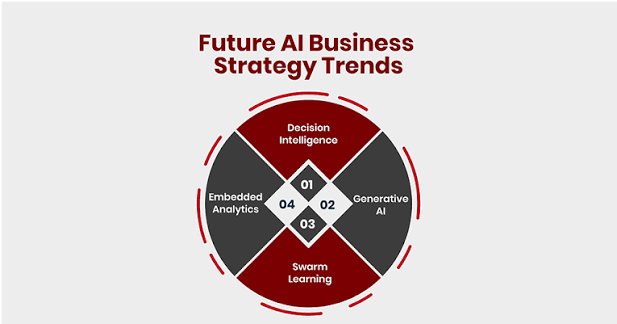

Interest in droven.io ai for business reflects a wider shift in how organisations evaluate artificial intelligence. Companies are no longer asking only whether AI is impressive; they are asking where it can reduce effort, improve decisions, strengthen customer service, or create new value. The most successful adoption begins with a business problem, not with pressure to use a fashionable tool.
Artificial intelligence can support many functions, including document processing, forecasting, personalisation, quality control, fraud detection, and internal knowledge search. However, results depend on data quality, workflow design, human oversight, and clear performance measures. A poorly selected AI project can consume budget without improving operations, while a focused initiative can produce measurable benefits in a relatively short period.
Choose Use Cases with Clear Operational Value
The first step is to identify tasks that are repetitive, data-heavy, time-sensitive, or difficult to scale manually. Customer support teams may use AI to classify requests and suggest responses. Finance departments may use it to detect unusual transactions. Sales teams may use predictive models to prioritise leads. Manufacturers may use computer vision to identify defects.
A strong use case has a defined user, an available data source, and a measurable outcome. Instead of setting a vague goal such as “use AI to improve productivity,” a company might aim to reduce the average time required to review a document from thirty minutes to ten. Specific targets make it easier to evaluate whether the technology is genuinely useful.
Assess Data Readiness Before Selecting Tools
AI systems depend on data, but more data does not automatically produce better results. Information must be accurate, relevant, properly labelled when required, and legally usable. Duplicate records, inconsistent formats, missing values, and outdated information can weaken model performance. Businesses should therefore audit data sources before committing to a platform or development approach.
Data governance is equally important. Teams need rules for access, retention, consent, security, and accountability. Sensitive customer or employee information should not be placed into external AI tools without understanding how it will be stored and processed. A responsible data foundation reduces legal risk and improves trust in the system’s outputs.
Keep Humans Responsible for Important Decisions
AI can support judgement, but responsibility should remain with people, especially in high-impact areas such as hiring, lending, healthcare, legal review, and safety. Models can produce inaccurate, biased, or incomplete results. Human review is necessary when an output could significantly affect an individual, a customer relationship, or a financial decision.
Organisations should define when users may accept an AI recommendation, when they must verify it, and when the system should not be used. Clear escalation paths are also necessary. If an employee notices a harmful or unreliable pattern, there should be a simple process for reporting it and pausing the affected workflow.
Run a Controlled Pilot and Measure the Results
A pilot allows the company to test value without exposing the entire organisation to unnecessary risk. The project should use a limited dataset, a small user group, and a clearly defined period. Before the pilot begins, the team should record baseline performance so that improvements can be measured fairly.
Useful metrics may include time saved, error rates, customer satisfaction, cost per transaction, adoption, and the frequency of human corrections. Qualitative feedback also matters because employees may identify problems that are not visible in summary statistics. A technically accurate system can still fail if it interrupts workflows or is difficult to understand.
Build AI Capability as an Ongoing Programme
AI adoption is not complete when a model goes live. Data changes, user behaviour evolves, and performance may decline over time. Monitoring should detect accuracy problems, unusual outputs, security incidents, and changes in cost. Teams also need processes for retraining, updating prompts, reviewing vendors, and retiring systems that no longer provide sufficient value.
Employee preparation should begin before the tool is deployed. People need to understand what the system can do, where it can fail, how their responsibilities will change, and how feedback will be used. Involving frontline users early often reveals practical requirements that senior decision-makers or external vendors may overlook.
Conclusion
The strongest AI strategies combine technology with process redesign, employee training, governance, and continuous measurement. Businesses that start with a practical need and expand only after proving value are more likely to achieve sustainable results. For additional insights into artificial intelligence, software, and digital transformation, readers can visit droven-io, a technology resource covering the ideas and tools shaping modern organisations.