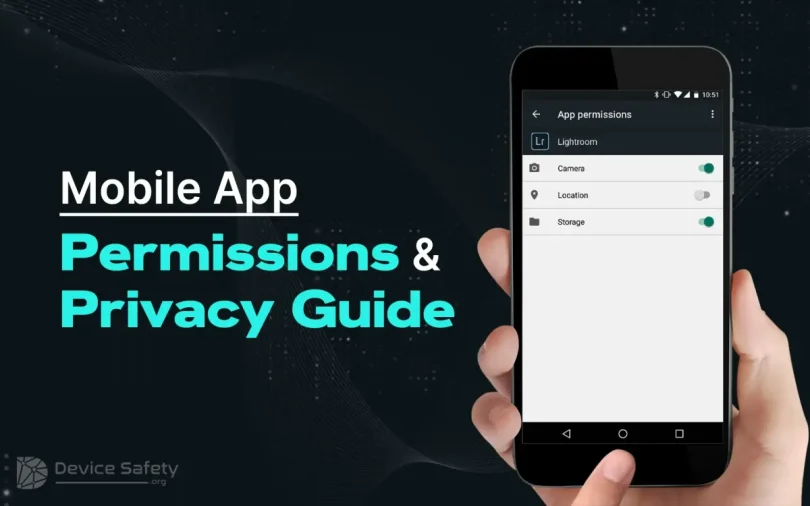

Security that actually gets used is security that feels simple. Phones live in kitchens, gyms, carpools, and late-night offices; policies must follow, not fight, everyday routines. The most effective approach starts small – clear permissions, sensible profiles, and predictable recovery – then scales outward without adding clutter. Calm design lowers mistakes. Honest copy prevents panic. Strong defaults do the quiet work in the background, so attention stays on the task, not the settings.
Safety guidance should be easy to find and easier to apply. For teams and readers who want a neutral, policy-style reference that consolidates core practices and settings, this website functions as a straightforward hub. Treat it as context for aligning terminology and expectations before rolling out changes at work or at home.
Least Permission Wins – A checklist that never gets old
Permissions creep faster than most realize. A lean baseline protects data without punishing productivity.
- Ask late, not early – request camera, mic, and location only at the exact moment they are needed.
- Scope by feature – if photos are optional, prefer “select photos” over full gallery access.
- Use one-time grants – temporary permissions prevent long-lived exposure.
- Prefer system share sheets – moving files through the OS keeps apps out of private stores.
- Audit quarterly – remove stale access in app settings; revoked rights reveal which prompts were unnecessary.
- Name the why – a single line (“Needed to scan a QR on sign-in”) reduces taps and support tickets.
This list scales from personal phones to fleet rollouts because it sets behavior, not brand-specific rules.
Profiles That Match Real Life
One device often serves many roles – work, family, travel. Profiles keep boundaries clean. A “work” profile can sandbox corporate apps with dedicated notifications and storage. A “home” profile can mute email at dinner and hide sensitive work alerts on weekends. Guest modes, kids’ profiles, and limited-feature logins prevent accidental purchases and keep private messages off borrowed screens.
Account tiers deserve the same realism. Admin rights should be rare and time-boxed. Editors need content tools, not billing access. View-only roles help contractors contribute without touching sensitive settings. When profiles reflect real duties, audits get shorter and breaches get smaller. The device feels lighter because it carries only what each life slice actually requires.
Signals, Logs, and Honest Alerts
Safety lives in small signals. A lock icon that shows live status, a last-synced timestamp, and a visible two-factor badge reduce guesswork. Logs belong to users as much as to admins – sign-ins, device changes, and payment updates should be readable in plain language. When something fails, the alert must be specific and solvable: “Code expired. Send a new one.” beats “Verification error.”
Clarity also calms. Rate-limit warnings, new-device prompts, and unusual-location flags should avoid alarmism while still prompting action. Give a short path to fix – “Secure account” opens to password change, session review, and recovery numbers in one place. Good alerts are small interfaces, not just messages. They succeed when they finish the job, not when they grab attention.
Defense in Depth for Everyday Devices
Strong single steps are not enough; layered basics protect against real-world slipups.
Encryption stays on by default. Screen locks use biometrics plus a PIN fallback. Password managers generate per-site credentials and store them with device-level protection. Two-factor authentication prefers phishing-resistant methods where possible – hardware keys or platform prompts – and uses codes only as a last resort. Backups run automatically to an encrypted destination, so loss is an inconvenience, not a crisis.
Network habits matter. Public Wi-Fi gets treated as untrusted. Auto-join is off for unknown networks. Hotspot names avoid personal details. When bandwidth is poor, sensitive actions wait for stable connections rather than risking half-finished flows. Quiet patterns like these stop the majority of issues that never make headlines because they never get a chance to start.
Building for Privacy by Default
Privacy-first design earns long-term engagement. Forms ask for the minimum necessary fields. Explainers sit next to inputs, not three taps away. Toggles use plain verbs – “Share analytics” or “Don’t share analytics” – instead of double negatives. If data improves a feature, the app says so in one sentence and shows how to opt out without penalty. Regional controls respect local rules without turning settings into a maze.
Data lifecycle choices deserve daylight. Retention periods are stated in days, not vibes. Export and delete live side by side in the account area. When a user leaves, residual access ends across push channels, email lists, and third-party tools within a predictable window. The goal is not secrecy. It is predictability that users and auditors can test.
Recovery Without Drama – The plan that saves real evenings
Most “security emergencies” are routine recoveries waiting for a plan. A graceful path beats a perfect wall. Store two recovery numbers, not one. Keep app-based authenticators backed up through encrypted sync or a printed code stored safely. Name the exact route to reset – Settings → Account → Recovery – so a stressed user can find it with a shaky hand. Preserve state after lockouts so, once verified, the app opens to the task that was interrupted.
Support scripts mirror the same path: confirm identity, restore access, rotate keys, review sessions. The tone stays factual. No shaming for lost phones. No labyrinth for expired codes. Recovery proves whether a safety model cares about people as much as about posture.
Quiet Wins Compound
Mobile safety scales when it respects time and attention. Least-permission defaults shrink exposure. Profiles mirror real roles. Signals and logs keep everyone oriented. Layers defend without drama. Recovery works when evenings are busy and hands are full. Teams can align on these practices quickly, then anchor policy details in a clear hub like this website while products and households adopt the habits at their own pace.
Nothing here asks for heroics – just steady choices that remove sharp edges from daily use. Do the small things consistently, and the big problems show up less often. That is what peace of mind looks like on a screen: ordinary, predictable, and always ready when life gets loud.