
The continuous evolution of technology, user demands, and development practices has led to the emergence of various software development methodologies. These methodologies serve as frameworks for organizing and managing the development process, ensuring that projects are delivered efficiently, on time, and with high quality.
Understanding these methodologies, how they differ, and when to apply them is essential for any team involved in software creation. In this article, we will explore the various software development methodologies, breaking them down to their core principles, advantages, and the types of projects that benefit the most from each. By the end of this guide, you will have a clear understanding of how each methodology works and how to choose the right one for your next development project.
We will also discuss the latest trends and emerging methodologies, helping you stay ahead of the curve in the ever-evolving world of software development.
What Are Software Development Methodologies?
The primary goal of any methodology is to create software that aligns with both technical requirements and business goals. While there is no one-size-fits-all methodology, the choice depends on factors like project size, timeline, scope, complexity, and the team’s skill set. Over the years, various methodologies have emerged, each designed to address different challenges in the development process.
Common Software Development Methodologies
1. Agile Development Methodology
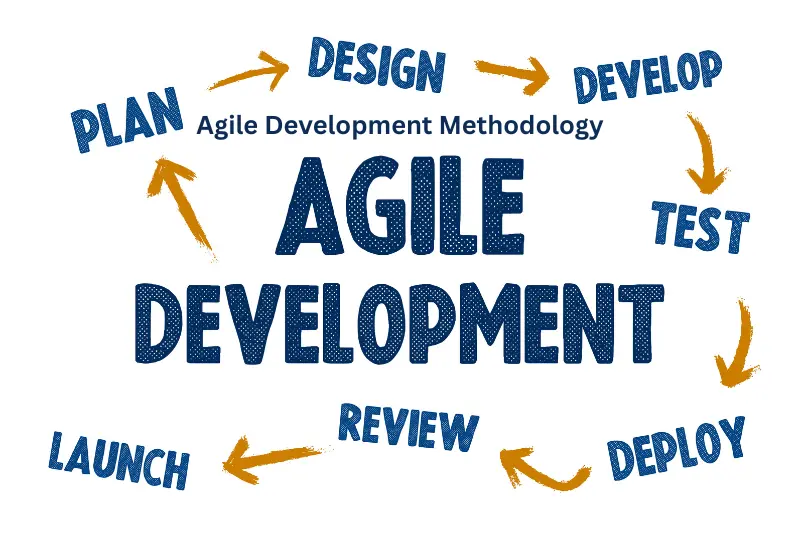
Agile development is one of the most widely used software development methodologies today. It focuses on iterative development, continuous feedback, and flexibility. The Agile approach encourages collaboration between cross-functional teams, with the goal of delivering software in short cycles, known as sprints. This method allows for frequent adjustments based on changing requirements or user feedback, making it ideal for projects that require flexibility and constant improvement.
Key Features of Agile:
- Iterative process: Software is developed in small increments or sprints, typically lasting between one and four weeks.
- Collaboration: Teams work closely with stakeholders and customers to gather feedback throughout the process.
- Flexibility: Agile allows for adjustments to be made at any stage of the development cycle.
- Continuous delivery: New features and updates are released frequently to ensure that the software remains relevant and competitive.
Agile methodologies are particularly suitable for projects with dynamic requirements, such as startups or companies in fast-moving industries where the product needs to evolve quickly. Scrum and Kanban are two popular frameworks under the Agile umbrella.
2. Waterfall Development Methodology
Unlike Agile, the Waterfall methodology follows a linear and sequential approach. It is one of the traditional software development methodologies that has been used for many years. In the Waterfall model, each phase must be completed before moving on to the next. This structure makes it easy to understand and manage, particularly for large projects with well-defined requirements.
Key Features of Waterfall:
- Linear approach: The development process flows in a single direction, from requirements gathering to design, implementation, testing, and deployment.
- Clear structure: Waterfall is easy to manage and ideal for projects with clear, fixed requirements.
- Documentation-heavy: Extensive documentation is required at each phase to ensure that there is no ambiguity.
Waterfall is best suited for projects where the scope and requirements are clearly defined at the start and are unlikely to change during development, such as in government contracts or enterprise-level applications.
3. Scrum Development Methodology
Scrum is a subset of Agile and one of the most popular software development methodologies in use today. It is an iterative, incremental framework used for managing complex software development projects. Scrum organizes work into time-boxed sprints, with each sprint focusing on a specific deliverable. The process involves collaboration between the Scrum team (Product Owner, Scrum Master, and Development Team) to ensure the project stays on track and delivers value with each sprint.
Key Features of Scrum:
- Roles: Scrum has defined roles, including Product Owner, Scrum Master, and Development Team.
- Sprints: Development is broken into short, manageable sprints, typically two to four weeks.
- Daily stand-ups: The team meets every day to discuss progress and any roadblocks.
- Product backlog: A prioritized list of features or tasks that need to be completed.
Scrum is best for projects where flexibility and rapid iteration are crucial, such as web and mobile applications. It works well with teams that can handle fast-paced development cycles.
4. DevOps Methodology
DevOps is a modern software development methodology that emphasizes collaboration between development and IT operations teams. It aims to shorten development cycles, increase deployment frequency, and improve the quality of software through automation, continuous integration, and continuous delivery (CI/CD). DevOps integrates development and operations into a single team, ensuring that software is delivered quickly and reliably.
Key Features of DevOps:
- Collaboration: DevOps breaks down the silos between development and operations teams.
- Automation: The use of automated testing, deployment, and infrastructure management to speed up the development process.
- Continuous Integration/Continuous Delivery (CI/CD): Ensures that software is always in a deployable state, reducing the risk of bugs and failures.
- Monitoring: Continuous monitoring of applications to ensure they perform well in real-time environments.
DevOps is especially beneficial for organizations looking to improve the speed and quality of their software releases while maintaining a high level of reliability. It is widely adopted in cloud-based applications and services.
One read, and you’ll see things differently!
Discover the Best Remote Work Tools for Seamless Success
Top Sustainable Fashion Brands You’ll Adore Instantly
Life-Saving AI Applications in Healthcare
Tech News in Hindi That’ll Leave You Speechless Today!
5. Lean Development Methodology
Lean software development focuses on maximizing value while minimizing waste. It emphasizes efficiency, quick delivery, and eliminating unnecessary processes. Lean principles are borrowed from Lean manufacturing, where the goal is to reduce waste, improve flow, and provide customers with exactly what they need, when they need it.
Key Features of Lean:
- Value-driven: Focuses on delivering features that provide the most value to users or customers.
- Waste reduction: Eliminates processes that do not add value to the product or customer experience.
- Continuous improvement: Regular feedback and iterations to improve processes and the end product.
- Flexibility: Lean is adaptable and can be applied to various project types.
Lean is best for projects that need to focus on delivering customer value quickly and efficiently. It works well in fast-paced environments with a focus on optimizing resources.
6. Extreme Programming (XP)

Extreme Programming (XP) is an Agile-based software development methodology that emphasizes technical excellence, communication, and continuous improvement. XP promotes practices such as pair programming, test-driven development (TDD), and continuous refactoring to ensure that the software remains flexible and of high quality throughout the development process.
Key Features of XP:
- Pair programming: Two developers work together at one computer, improving code quality and knowledge sharing.
- Test-driven development: Developers write tests before writing the code, ensuring that code is always tested and reliable.
- Frequent releases: Software is released in small increments to ensure that features are continuously tested and delivered.
- Customer collaboration: The customer is involved throughout the development process to ensure their needs are met.
XP is ideal for teams working on complex, high-risk projects where quality and technical excellence are crucial. It is often used in projects where continuous feedback and high adaptability are essential.
7. Feature-Driven Development (FDD)
Feature-Driven Development (FDD) is another Agile-inspired software development methodology that focuses on delivering tangible, working software in a structured, feature-based manner. FDD breaks down the development process into small, feature-specific tasks that can be completed in a short period. The goal is to provide a quick, incremental approach to delivering a product that satisfies user requirements.
Key Features of FDD:
- Feature-centric: Development is organized around individual features rather than tasks or phases.
- Modeling and design: A feature list is created and then modeled to ensure that each feature fits into the overall product.
- Short cycles: Features are developed in short, manageable cycles, ensuring quick delivery and frequent feedback.
- Collaborative: Developers, designers, and stakeholders collaborate throughout the process to ensure that features meet user needs.
FDD is best suited for large-scale software projects that require clear organization and prioritization. It works well in environments where there is a need for frequent releases and constant user feedback.
Conclusion
In today’s fast-paced software development world, choosing the right software development methodology is critical to the success of any project. Whether you are working with Agile, Waterfall, Scrum, DevOps, or any other methodology, understanding their unique advantages and limitations allows you to tailor your development process to meet your specific needs.
FAQs
What is the best software development methodology for my project?
The best methodology depends on the project’s size, complexity, and scope. Agile is great for projects needing flexibility and continuous feedback, while Waterfall works well for projects with clear, fixed requirements.
How do I choose the right software development methodology?
Consider factors like project goals, team size, and timeline. If the project needs rapid changes, Agile or Scrum might be ideal. For large, structured projects, Waterfall or DevOps could be better suited.
What are the key differences between Agile and Waterfall methodologies?
Agile focuses on flexibility, iterative development, and frequent updates. Waterfall, on the other hand, follows a sequential process and is better for projects with defined requirements and minimal changes.
How does DevOps improve the software development process?
DevOps integrates development and operations, emphasizing automation and continuous delivery. This reduces deployment time, improves collaboration, and ensures higher-quality software through faster releases.
Can a project use multiple software development methodologies?
Yes, many organizations blend methodologies based on project needs. For example, teams might use Agile for development but apply Waterfall for documentation and planning.